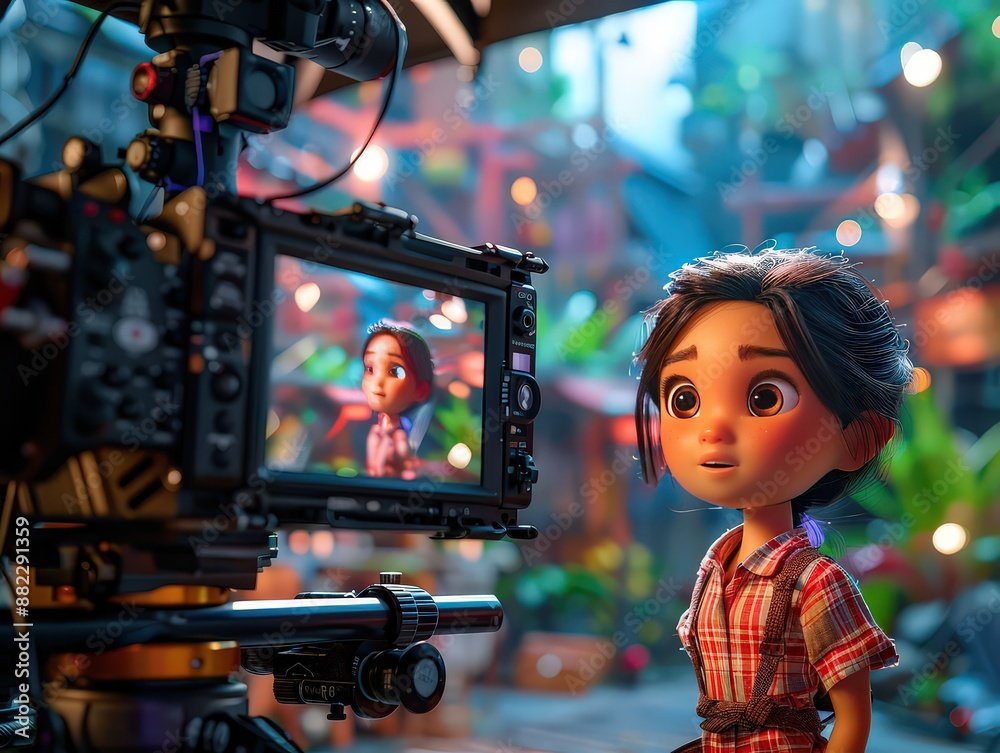
When you watch your favorite animated characters leap off the screen, do you ever stop to think about the intricate symphony of talent that brings them to life? It's not just the dazzling visuals or the compelling story; it's the profound collaboration of Character Design, Animation & Voice Acting that truly shapes character personality and emotion, transforming pixels into poignant, relatable beings.
This isn't merely about creating a pretty face or a funny voice; it's about crafting a soul. From the initial sketch to the final vocal inflection, every decision is a brushstroke on the canvas of a character's identity, making them resonate deep within our hearts and minds.
At a Glance: Bringing Animated Characters to Life
- Voice acting is foundational: It's not an add-on; it injects personality, emotional depth, and authenticity, making characters relatable and memorable.
- Collaboration is key: Character designers, animators, and voice actors work together, influencing each other to create a cohesive performance.
- Emotional depth drives connection: Techniques like vocal modulation, pitch control, and improvisation build empathy and impact.
- Casting decisions matter: Authenticity, diversity, and vocal versatility are crucial for finding the perfect voice that aligns with a character's essence.
- Beyond the script: Improvisation adds spontaneity and richness, while cultural nuances enrich storytelling globally.
- Evolution continues: Technology like AI and VR, alongside greater diverse representation, are shaping the future of voice acting.
- It's a multifaceted art: Requires vocal training, deep character analysis, performance skills, and seamless integration with sound design.
The Unseen Architects of Animated Souls: More Than Just Pictures and Sounds
Behind every unforgettable animated character lies a meticulous process where design, movement, and sound converge. Think of it like a three-legged stool: if one leg is missing, the character – and the story – simply can't stand. Character design gives them their visual identity, animation imbues them with movement and non-verbal cues, and voice acting breathes life into their words, thoughts, and feelings.
This isn't just about entertainment; it's about creating empathy, fostering understanding, and often, shaping cultural touchstones. A character isn't just a design; they're a vessel for emotion, and the voice is the primary conduit for that emotion to reach the audience.
The Power of the Voice: Infusing Personality and Emotion
Voice acting isn't merely reading lines; it's an art form that transforms animated entities into relatable beings, infusing them with personality, emotional depth, and raw authenticity. It creates stronger connections and leaves lasting impressions, turning fleeting moments into cherished memories. Without a compelling voice, even the most beautifully animated character can feel hollow.
How Voice Elevates Animated Storytelling
Emotional depth is a foundational element in animation, not just an additional layer. Voice actors are masters of conveying complex emotions and character arcs through a powerful toolkit:
- Modulation: Varying the tone, pitch, and volume of their voice to reflect changing moods and intensities. A sudden whisper can convey fear, while a booming shout signifies rage or triumph.
- Improvisation: Adding spontaneous reactions, ad-libs, or unexpected nuances that make a character feel genuinely alive and unpredictable. This often reveals deeper layers of personality than the script alone might suggest.
- Performance Nuances: Subtle sighs, gasps, hesitations, or quick intakes of breath that add realism and emotional subtext, often communicating more than words ever could.
These techniques don't just tell a story; they show it, allowing the audience to feel what the character feels, building a bridge of empathy that visuals alone might struggle to construct.
Finding the Perfect Fit: The Art of Voice Casting
Casting the right voice is perhaps one of the most critical decisions in character development. It's not about finding the "best" voice, but the right voice – one that resonates profoundly with the character's essence.
Key Factors in Voice Casting
- Character Authenticity: Does the voice genuinely align with the character's personality, motivations, and backstory? A miscast voice can break the illusion, no matter how good the animation. Think of a mighty king; a deep, resonant voice lends authority, while a reedy, hesitant tone might suit a timid wizard.
- Casting Diversity: An increasingly vital factor, ensuring that the vocal talent reflects a wide range of experiences and backgrounds. This enriches storytelling, makes characters more globally relatable, and fosters genuine representation.
- Vocal Versatility: The actor's ability to express a broad spectrum of emotions, pitches, and cadences. A versatile actor can deliver a character's joy, sorrow, anger, and confusion with equal conviction, allowing for dynamic character arcs.
Mastering the Audition
For aspiring voice actors, the audition is your stage. Effective audition techniques significantly increase your chances of landing a role:
- Research the Character: Understand their personality, motivations, and role in the story. What's their backstory? What makes them tick?
- Practice Cold Reads: Be ready to perform lines you've never seen before, demonstrating your ability to quickly interpret and embody a character.
- Use Professional Recording Setups: Even a home studio needs to sound clean. Good microphones and acoustic treatment are non-negotiable.
- Vocal Warm-ups: Prepare your voice for emotional delivery, improving clarity, strength, and preventing strain.
- Embrace Feedback: Directors offer invaluable insights. Listen, adapt, and show your coachability.
Matching a character's voice style to their archetype is vital. A deep, commanding voice suits a powerful leader, while a whimsical, light tone brings a playful fairy to life. This synergy creates an immediate, believable connection for the audience.
Voices That Define Eras: Legendary Performances in Animation
Certain voice performances transcend mere acting; they become the very fabric of a character, creating legacies that resonate for generations. These aren't just voices; they're cultural touchstones.
Consider the warm, steadfast determination Tom Hanks brings to Woody in Toy Story, anchoring the franchise with unwavering emotional authenticity. Or the boundless, improvisational genius of Robin Williams as the Genie in Aladdin, a performance so vibrant and unique it literally reshaped how animated characters could be voiced. Then there's James Earl Jones as Mufasa in The Lion King, whose deep, authoritative, yet profoundly warm tones convey wisdom, love, and gravitas, defining the very essence of a noble king.
These actors didn't just speak lines; they breathed life into these characters, making them unforgettable through:
- Emotional Authenticity: Making us believe in their joy, sorrow, and struggle.
- Unique Vocal Traits: Distinctive pitches, rhythms, and mannerisms that become synonymous with the character.
- Cultural Relevance: Performances that capture the zeitgeist and remain relevant across time.
- Memorable Catchphrases: Lines delivered with such impact they become part of popular culture.
- Versatility: The ability to convey a wide range of emotions and situations within a single character.
These performances don't just accompany the animation; they define it, turning characters into enduring icons. If you're looking for more examples of how iconic characters are brought to life, you might want to Explore Fiona or Shreks stories to see how their personalities were shaped.
The Voice Actor's Toolkit: Techniques for True Immersion
Behind every seamless performance is a rigorous discipline and a sophisticated understanding of vocal mechanics and emotional delivery.
Core Voice Acting Techniques
- Vocal Warm-ups: Non-negotiable for preparing the voice, improving clarity, strength, and range for emotional delivery. These exercises prevent strain and ensure consistent performance.
- Mastering Character Nuances:
- Accent Variations: Authentically portraying characters from diverse backgrounds.
- Pitch Control: Raising or lowering the voice to convey age, status, or emotion (e.g., a high-pitched squeak for nervousness, a low growl for menace).
- Sound Modulation: Changing vocal tone and timbre to reflect personality – a nasally voice for an annoying character, a smooth, rich tone for a charismatic leader.
- Breathing Techniques: Crucial for vocal strength, sustaining long lines, and delivering emotional weight without sounding strained or out of breath. Diaphragmatic breathing is key.
- Improvisational Skills: To add spontaneity, explore unexpected emotions, and enrich character depth. This allows actors to react organically to animated movements and even other characters' lines.
- Collaboration with Animators: This is where the magic truly happens.
- Open Communication & Feedback Loops: Regular discussions ensure both parties are aligned on character intent.
- Coordinating Timing and Rhythm: Ensuring vocal delivery perfectly matches lip-sync and character movement.
- Joint Character Development: Sometimes, an actor's vocalization might even inspire an animator to refine a character's visual design or movement.
- Creative Experimentation: Trying different vocal approaches to see what best serves the character and story.
This deep collaboration transforms the animation from a visual spectacle into a truly immersive experience.
Crafting Distinct Personalities and Emotional Connections
The voice actor's primary goal is to forge an emotional connection. This is achieved through:
- Tonal Variation: The subtle shifts in voice that communicate unspoken thoughts and feelings.
- Voice Modulation: The dynamic changes in pitch, volume, and pace that keep a character engaging and reflective of their internal state.
- Performance Nuances: Micro-expressions and vocal tics that make a character uniquely themselves.
- Character Empathy: The actor's ability to truly understand and embody the character's perspective, allowing them to convey genuine emotion.
- Psychological Impact: The lasting impression a character's voice leaves, making them relatable, inspiring, or even intimidating.
To craft truly distinct personalities, actors delve into: - Vocal Nuances: The subtle inflections that differentiate one character's "hmm" from another's.
- Transformations: How a character's voice changes over time as they grow or face challenges.
- Emotional Depth: Exploring the full spectrum of human emotions, even for non-human characters.
- Character Flaws and Relationships: How a voice might reflect insecurity, devotion, or conflict with others.
The Global Stage: Cultural Influence and Beyond the Script
Animation transcends borders, and voice acting plays a critical role in its global impact.
Cultural Resonance in Voice Acting
Cultural influence profoundly impacts voice acting, enriching stories in myriad ways:
- Cultural Representation: Giving authentic voices to diverse characters, ensuring respect and accuracy.
- Regional Accents: Adding a layer of realism and personality, distinguishing characters from specific regions.
- Language Diversity: The ability to perform in multiple languages or to subtly integrate linguistic elements, allowing characters to resonate globally.
The effects of globalization mean that voice talent training increasingly includes cultural nuances to portray diverse characters accurately. This fosters character authenticity and deeper audience engagement worldwide. Consider "seiyuu" in Japan, where voice actors hold star power akin to pop idols, a testament to the cultural significance of vocal performance in anime.
The Power of Improvisation
Though scripts are used, improvisation plays a crucial role by infusing characters with spontaneity, unexpected emotions, reactions, and humor. It's the difference between a character feeling robotic and feeling genuinely alive.
Key improvisational techniques include:
- Ad-libbing: Adding small, unscripted remarks or sounds that enhance realism.
- Emotional Recall: Drawing on personal experiences to infuse dialogue with authentic emotion.
- Adding Character Backstory: Weaving in details or reactions that suggest a rich, lived history for the character.
- Voice Modulation: Spontaneously adjusting pitch, pace, and tone to react to imagined scenarios.
- Interactive Dialogue: Reacting genuinely to the perceived "other" in a scene, even if they're not there.
These techniques make characters feel organic and genuine, elevating the animation from a series of scenes to a living, breathing world.
The Guiding Hand: Effective Voice Direction
Even the most talented voice actor benefits from insightful direction. Effective voice direction is about more than just telling an actor what to do; it's about nurturing a performance, guiding them to unlock the character's full potential.
Developing Character Personality
Key elements for character personality development under expert direction include:
- Character Quirks: Identifying and amplifying vocal habits or speech patterns that define a character.
- Voice Choices Reflecting Emotional States: Guiding actors to choose specific vocal qualities (e.g., breathy for fear, clipped for anger) that align with internal emotions.
- Tone Variation for Arcs: Ensuring a character's voice evolves naturally throughout their story, reflecting growth or decline.
- Vocal Nuances for Relationship Dynamics: How a character speaks differently to a friend versus an enemy, a child versus a parent.
- Personality Traits Highlighting Strengths/Weaknesses: Using vocal delivery to subtly reveal courage, insecurity, wisdom, or foolishness.
Exploring Vocal Range
Effective direction also pushes actors to explore and expand their vocal capabilities:
- Pushing Beyond Limitations: Encouraging experimentation with vocal exercises that broaden an actor's comfortable range.
- Experimenting with Voice Modulation: Trying different approaches to pitch, pace, and volume for a single line.
- Pitch Variation: Consciously utilizing higher and lower registers to add dynamism.
- Tonal Qualities: Exploring different 'colors' or textures of the voice (e.g., warm, gravelly, smooth, sharp).
- Accent Variations: Guiding actors through different accents to find the perfect fit or to demonstrate versatility.
Effective Direction Techniques
- Clear Objectives: Articulating precisely what emotions, intentions, or pacing are needed for a scene.
- Fostering a Collaborative Environment: Creating a safe space where actors feel empowered to experiment and contribute ideas.
- Emotional Anchoring: Helping actors connect to a character's core emotion or motivation.
- Integrating Physicality: Encouraging actors to use their bodies during recording, as physical movement can naturally influence vocal delivery.
- Providing Iterative Feedback: Offering specific, constructive criticism and allowing actors to refine their performance through multiple takes.
The Evolution and Future of Voice Acting
From humble beginnings to a technologically advanced future, voice acting has continuously adapted and innovated.
A Brief History
The evolution of voice acting is intertwined with animation technology:
- Early Silent Shorts: Characters expressed themselves purely through visuals and intertitles.
- Synchronized Sound (The 1920s): A revolutionary shift that allowed characters to speak, sing, and express sounds, deepening character development almost overnight. Mickey Mouse's debut in Steamboat Willie is a prime example.
- Digital Recording and Advanced Software: Modern technology has brought unparalleled clarity, flexibility, and the ability to layer complex soundscapes, enhancing emotional connection and narrative depth exponentially.
The Road Ahead: Future Transformations
The future of voice acting is poised for exciting transformations driven by technology and shifting industry demands:
- Virtual Reality (VR) for Dynamic Character Responses: VR environments could allow voice actors to react in real-time to virtual stimuli, creating truly immersive and responsive character performances.
- Artificial Intelligence (AI) for Diverse Voices and Quicker Production: While not replacing human talent, AI might be used for generating background voices, rapid prototyping, or providing linguistic variety for global audiences, especially in early development stages.
- Increased Diverse Representation: A continued, crucial push for authentic voices from all backgrounds, reflecting the global audience of animation.
- Remote Recording: The pandemic accelerated this trend, allowing production studios to access global talent pools, breaking down geographical barriers.
- Interactive Storytelling: As games and immersive experiences become more complex, audience choices will increasingly influence character responses, demanding nuanced, branching vocal performances.
Demystifying the Craft: Skills, Misconceptions, and Cultural Differences
Voice acting is a multifaceted art form – a blend of performance, training, and emotional intelligence.
Essential Skills for a Successful Voice Actor
- Perfecting Vocal Techniques: Consistent practice in breathing, articulation, pitch control, and modulation.
- Deep Character Interpretation: The ability to analyze scripts, understand subtext, and truly get inside a character's head.
- Experimenting with Different Styles and Tones: Building a versatile vocal repertoire.
- Innovation: The courage to try new things and bring a unique flair to a role.
- Thorough Character Analysis: Before even speaking a word, understanding who the character is.
- Consistent Vocal Exercises: Maintaining vocal health and flexibility.
It's worth noting that voice acting often leads to on-screen acting opportunities, as the versatility and interpretative skills showcased are highly transferable.
Common Misconceptions
A common misconception is that voice acting only requires a wide vocal range. While range is helpful, true talent lies in creating character depth, conveying emotions, and connecting with the audience by deeply understanding a character's motivations and nuances. It's about acting, not just making funny voices.
Cultural Nuances in Voice Acting
Voice acting also differs significantly across cultures:
- Regional Accents: What sounds natural and authentic in one region might not in another.
- Humor: Comedic timing and delivery vary greatly, requiring cultural sensitivity.
- Emotional Delivery: The intensity or subtlety with which emotions are expressed can differ, impacting storytelling and relatability for local audiences.
In Japan, for instance, the "seiyuu" (voice actors) for anime are celebrated stars, often engaging in music, live events, and fan interactions, highlighting a unique cultural appreciation for the craft.
The Phases of Bringing a Voice to Life
Voice actors generally follow a structured 4-phase process to deliver compelling performances:
- Voice Training: This is the bedrock. It develops versatility (a wide vocal range, different accents, character voices) and endurance (vocal control and stamina through breathing techniques, posture, and targeted exercises) essential for compelling, sustained performances without vocal fatigue.
- Character Analysis: Before stepping into the booth, actors conduct thorough research.
- Scriptwriting: Provides the blueprint – personality, motivations, emotional arcs, and dialogue.
- Character Design: Visual elements directly inform vocal qualities. Does a large, hulking character have a deep rumble or a surprisingly high-pitched voice? Does a delicate fairy have a tinkling voice or a surprisingly gruff one? The visual informs the vocal interpretation.
- Acting: This is the performance itself, requiring a delicate balance of the actor's personal flair and unwavering fidelity to the character. It involves:
- Accurate Script Interpretation: Understanding the intent behind every line.
- Grasping Subtext: What the character really means, even if the words say something else.
- Delivering Dialogue with Timing, Rhythm, and Interaction: Making the lines land perfectly, fitting the animation, and interacting believably with other characters (even if recorded separately).
- Sound Design: While often a post-production task, it works in tandem with voice acting to create an immersive auditory atmosphere. Voice acting provides the emotional connection, and sound design amplifies it with effects, music, and ambient noise. Voice actors may even be responsible for voice foley (grunts, growls, sighs), and sound designers synchronize these effects in post-production, creating a seamless aural experience.
Types of Voice Acting in Animation
The world of animated voice work is diverse, encompassing several distinct roles:
- Character Voice Acting: The most recognized form, where actors bring animated personas to life through vocal performances that reflect their unique personalities, emotions, and narrative arcs. This demands immense versatility and the ability to truly become another being.
- Narration: A guiding voice that provides context, exposition, or insight, often setting the mood and tone of the story. This requires a balanced delivery of information and engagement, often with a consistent, authoritative, or comforting tone.
- Commercial Voice Acting: For animated advertisements, where the goal is to deliver messages clearly and persuasively while respecting brand tone and evoking specific emotions quickly to sell a product or idea.
- Translation Voice Acting (Dubbing): Adapting content for international audiences by replacing original dialogue with translated scripts. This is a complex art, requiring actors to match lip movements, convey original emotional expressions, and navigate cultural nuances to make the dubbed version feel natural and authentic to a new audience.
Your Call to Action: Crafting Your Own Animated Impact
Whether you're an aspiring character designer, animator, or voice actor, understanding this symbiotic relationship is crucial. The journey to creating a truly unforgettable character starts with empathy – for the character, for the story, and for the audience who will ultimately connect with your creation.
Begin by studying the masters, both in design and vocal performance. Practice consistently, seek feedback relentlessly, and never stop exploring the emotional depth that makes animated characters so powerful. Dive into script analysis, observe human behavior, and experiment with your own voice. The world of animation is waiting for your unique contribution, ready for the next iconic character that you, or your team, will bring to life through the magic of design, movement, and voice.